All Champions Have Coaches.
Business coaching has its roots in sports. In the 1970s, Timothy Gallwey, captain of Harvard’s tennis team, wrote a series on personal and professional excellence. Inspired by him, Sir John Whitmore, a former racecar driver, coined “performance coaching,” introducing clear goals, feedback, and open communication, which he brought into business.
Yet, as coaching has expanded, uncredentialed practitioners have emerged, occasionally raising skepticism about the profession.
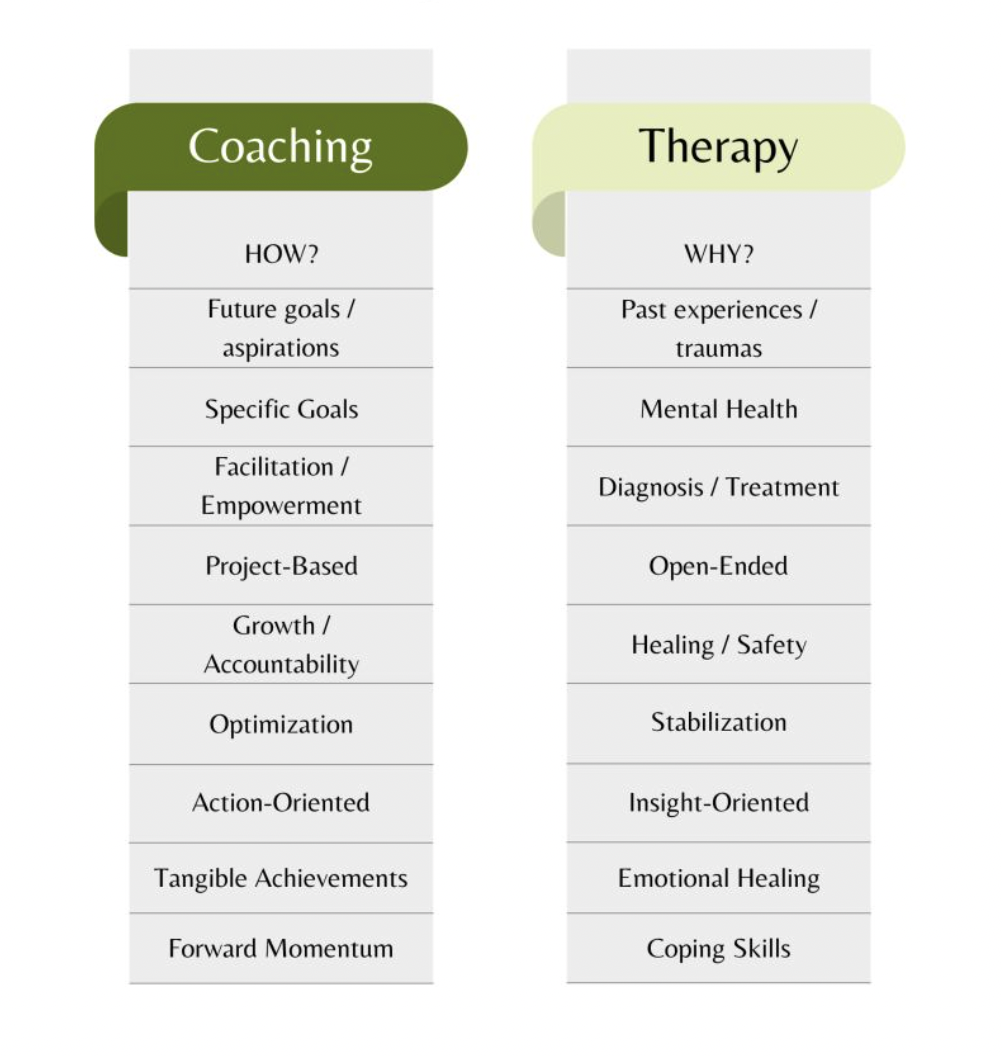
A common resistance I hear in business: “Isn’t it like therapy?” One client jokingly told me to be more businesslike and less like their therapist. I reassured him: we’re focused on business, not unpacking trauma.
Both unfold through conversation and require real vulnerability—but that’s where the similarity ends. The training, methods, and results couldn’t be more different. Therapy explores the WHY; coaching tackles the HOW.
Coaching is about actionable insights, accountability, and performance—turning potential into measurable impact.
Coaching vs. Therapy